All Categories
Featured

The Shift Towards Serverless SEO in 2026
Table of Contents

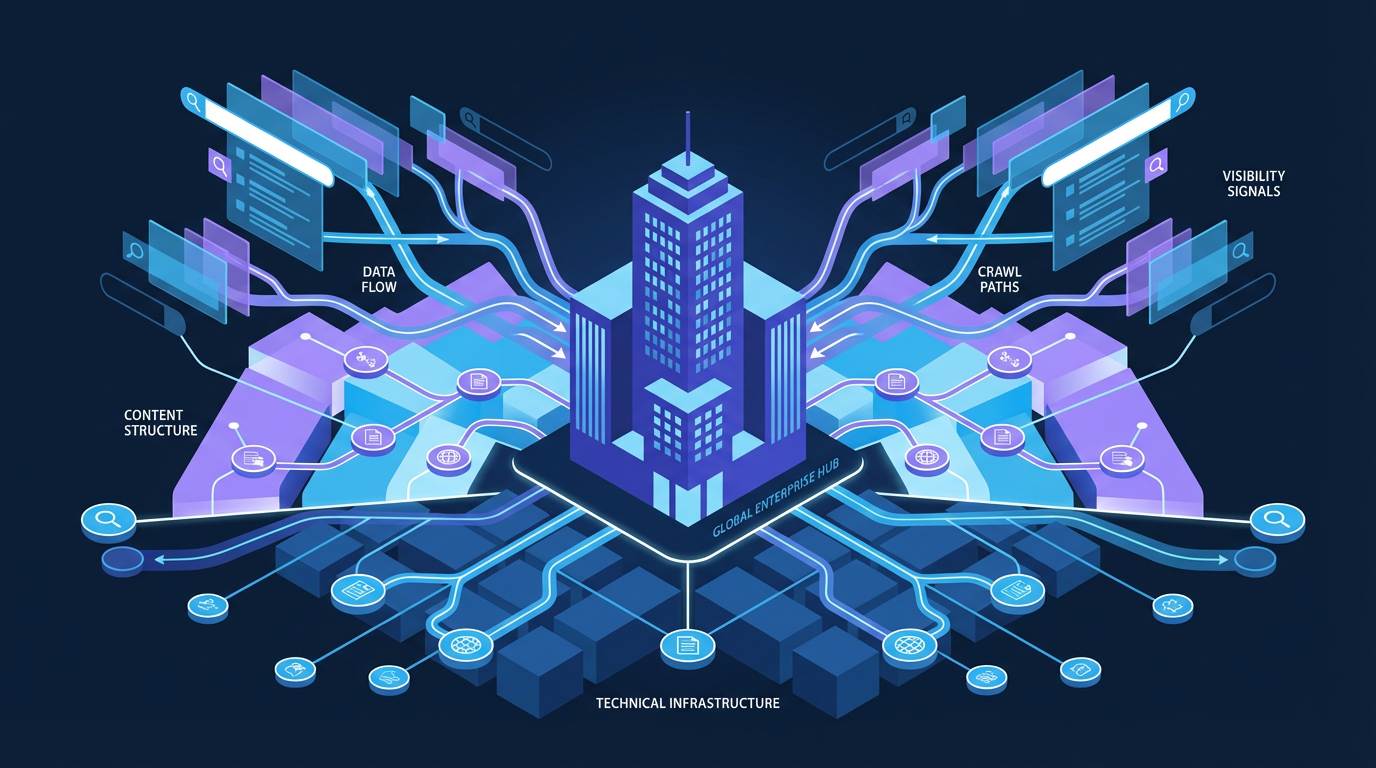
Digital environments in 2026 have actually shifted far from monolithic content management systems towards decentralized, API-first architectures. For enormous material networks managing numerous countless URLs, the ability to press and pull information through standardized user interfaces is no longer optional. These systems rely on high-frequency data exchanges to keep search engine indices precise and user experiences quick. When a network reaches a particular scale, manual updates end up being difficult, making the technical application of automated data pipelines the primary driver of presence.
Architectural Foundations for Scalable Search Performance
The core of a 2026 content network is the Application Shows User Interface (API) Instead of a conventional database-to-template relationship, contemporary websites work as a collection of endpoints. This allows for material to be updated in one place and showed throughout multiple platforms all at once. Technical teams typically find success when buying Niche SEO Growth to manage high-frequency information updates. This method ensures that search crawlers receive the most existing variation of a page without the overhead of heavy server-side making.

The shift to headless structures has actually permitted developers to separate the data layer from the presentation layer. In this environment, search engine optimization depends heavily on how well the API provides structured information. Search bots in 2026 are extremely conscious latency and information consistency. If an API endpoint takes more than 100 milliseconds to respond, the crawl budget plan for that entire domain may be lowered. For that reason, caching strategies at the edge have ended up being a basic requirement for keeping a high-performing digital existence.
Strategic Application of Enterprise Data Systems
Handling large-scale SEO needs a focus on how metadata is propagated through the network. When brand-new pages are generated programmatically, the API must instantly inject schema markup, canonical tags, and internal connecting structures. Effective Scaling Success Frameworks supplies the essential infrastructure for rapid content release across countless subdirectories. Without this level of automation, the threat of duplicate content or orphan pages increases considerably as the network broadens.
One common difficulty in 2026 is the synchronization of worldwide data. For networks running in several areas, the API needs to manage localization and hreflang qualities through a centralized logic controller. This prevents the conflicting signals that typically plague large websites. By utilizing a single source of reality provided by means of API, companies can ensure that a price modification or an item upgrade is shown in every language and region within seconds. This level of accuracy is what online search engine now anticipate from reliable domains.
Discovery and Indexing in the Programmatic Period
The way online search engine discover material has changed. While sitemaps are still utilized, numerous big networks now utilize Webhooks to notify search engines of brand-new content the minute it is published. This "push" design reduces the time between publication and indexing from days to minutes. Technical teams looking for Niche SEO Growth for Verticals highlight the need for low-latency responses at the edge to guarantee these alerts lead to effective crawls. When the API is the bottleneck, the entire search technique suffers.
The 2026 search environment likewise focuses on data precision. If an API serves out-of-date information that opposes other parts of the web, the domain's trust score can drop. This makes error handling and data validation within the API pipeline a high priority. Modern systems employ automated screening scripts that verify the output of an API before it is ever exposed to a search spider. These scripts examine for 404 errors, broken redirects, and missing out on needed fields in the JSON output.
Handling Data Consistency and API Health
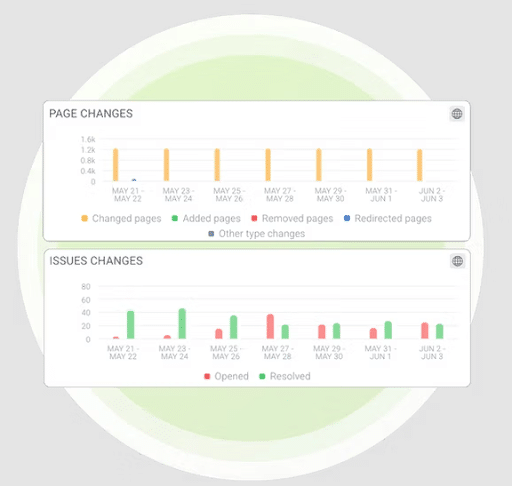
System monitoring has become a specialized branch of SEO. In 2026, a "broken link" is typically actually a failed API call or a timeout from a third-party information supplier. Monitoring tools now track the health of specific endpoints rather than just the availability of a URL. If the backend content delivery system experiences a slowdown, the effect is felt immediately across the whole search footprint. High-scale networks typically use redundant API clusters to prevent a single point of failure from taking down countless pages.
Rate limiting is another technical difficulty that needs mindful management. If an online search engine crawler hits an API too often, the server may block the request to protect efficiency. Engineers should stabilize the requirement for quick indexing with the server's capacity to deal with countless simultaneous requests. Utilizing a middleware layer to prioritize search bot traffic over non-essential background tasks is a typical service utilized by the world's largest material suppliers.
Future-Proofing Large-Scale Content Networks
As we move deeper into 2026, the dependence on AI-driven search representatives indicates that information need to be even more structured and available. These representatives do not "browse" a website in the conventional sense. They query APIs straight to extract particular realities and figures. A network that fails to supply a tidy API interface will discover itself invisible to these brand-new search technologies. The focus has moved from "websites" to "information entities" that can be recombined and served in different formats.
The expense of preserving these systems is likewise an aspect. While an API-driven approach needs more initial technical financial investment than a simple CMS, the long-term efficiency is much greater. The capability to update content at scale without manual intervention saves countless hours of work each year. Additionally, the modular nature of these systems enables simpler updates to the technology stack. If a new front-end structure becomes popular, the information layer remains untouched, permitting a quicker transition without losing search rankings.
The security of the API layer is paramount. In 2026, vulnerabilities in a content API can result in mass injections of spam or malicious redirects, which result in immediate de-indexing by online search engine. Rigorous authentication procedures and regular security audits of all public-facing endpoints are important. For those handling high-traffic data nodes, the intersection of security and SEO has actually never ever been more obvious. A safe and secure API is a steady API, and stability is a core requirement for any site intending to dominate search outcomes at scale.
The digital space will continue to favor networks that can manage intricacy through automation. By concentrating on the technical health of the API, guaranteeing information consistency, and prioritizing fast shipment, large-scale content networks can keep their visibility in an increasingly competitive environment. The shift to programmatic SEO by means of API is not simply a trend but a fundamental change in how the web is indexed and comprehended by modern search technology.

Latest Posts
Next-Gen PBN Management Systems for 2026

Advanced Link Building Frameworks for Competitive Markets
Integrating Automation Into Your Link Building Workflow